A hot water system is one of those things you never think about until the morning it gives up. No hot water for the shower, and suddenly it’s the most important appliance in the house. This is a plain guide to replacing a hot water system on the Gold Coast — when it’s genuinely time, which type suits your home, and what a changeover actually involves — written by a licensed local plumber, not a sales brochure.
How long should a hot water system last?
Most systems give you somewhere between 8 and 15 years, depending on the type, the water quality and how hard the household works it. Electric and gas storage tanks tend to sit around the 8–12 year mark. Continuous-flow (instantaneous) gas units and heat pumps can run longer when they’re looked after. Once a system is past about a decade, you’re into the zone where a failure is a matter of when, not if.
Repair or replace? An honest rule of thumb
Not every hot water problem means a new system. Here’s the honest way we think about it:
- A leaking tank usually means replace. Once the inner cylinder rusts through and water is pooling under the unit, the tank is done — there’s no patching it.
- A failed element, thermostat or valve is usually a repair. These are wear parts. On a system that’s otherwise in good nick and not too old, replacing the part is the sensible call.
- Around 8–12 years, the maths shifts. If a fair-sized repair lands on an ageing unit, you can end up spending good money on a system that will fail again soon. At that point a new, more efficient unit often wins.
A good plumber will tell you straight which side of that line you’re on — and there’s no point replacing a system that has years left in it.
Gas, electric, solar or heat pump?
There’s no single “best” type — it depends on your existing connections, how much hot water your household uses and what you’re trying to achieve. The short version:
- Continuous-flow gas heats water on demand and never runs out, which suits bigger households. It needs a gas connection and adequate gas supply.
- Electric storage is the simplest and cheapest swap if you already have one — reliable, but running costs are higher than the alternatives.
- Heat pump systems are highly efficient in our warm Gold Coast climate and can be among the cheapest to run, though the upfront cost is higher.
- Solar hot water uses roof collectors with an electric or gas booster, cutting running costs over time where the roof and orientation suit.
We install the brands that last and have proper parts support in Australia — Rinnai, Dux, Rheem and Caroma — and we’ll talk through the right size and type for your house, not a generic chart.
What a hot water changeover involves
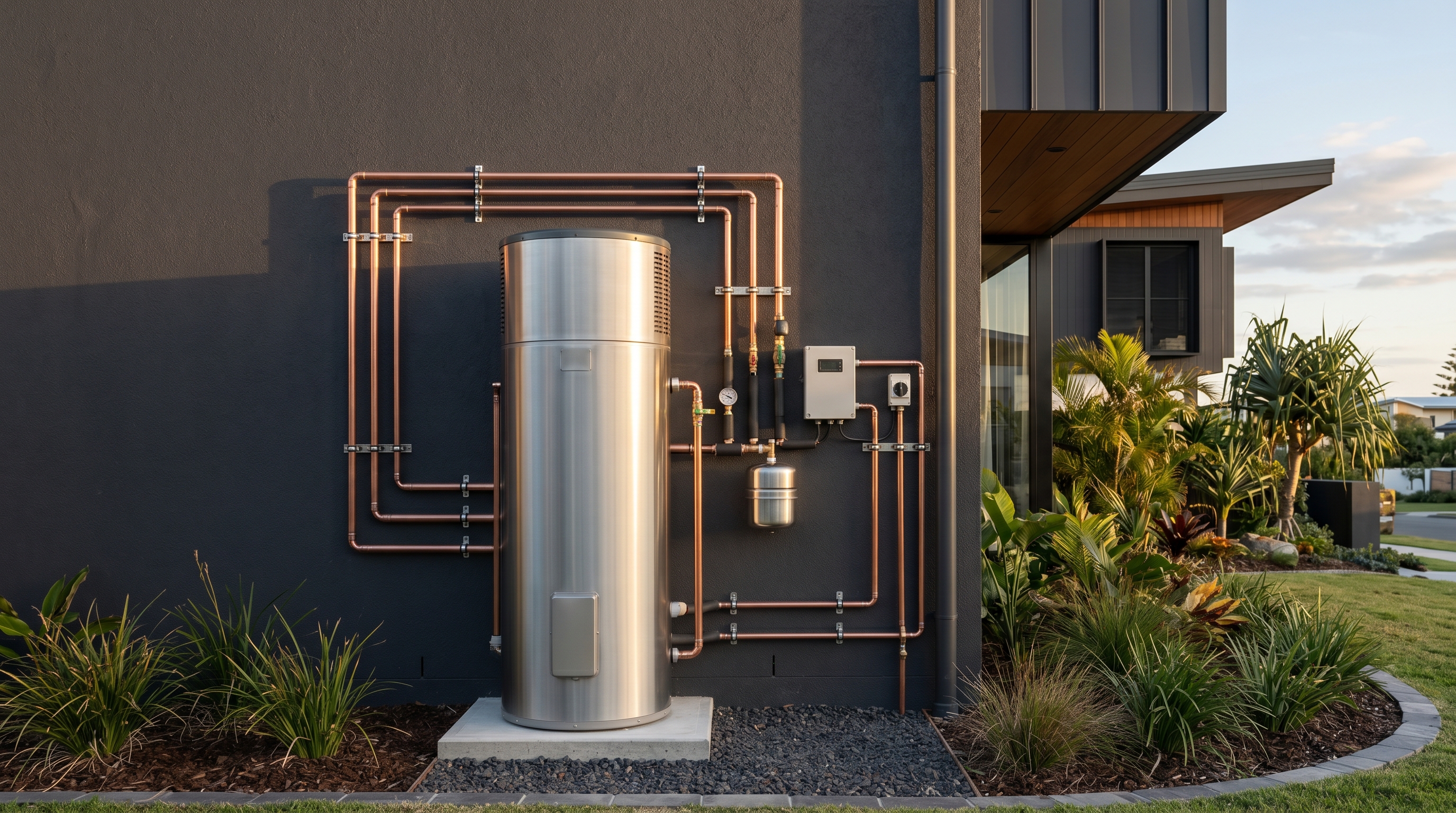
A like-for-like changeover is usually a same-day job. We isolate the water (and gas, if it’s a gas unit), drain and remove the old system, set and connect the new one, fit any tempering or safety valves required, then test and commission it so you’ve got safe, regulated hot water. We take the old unit away with us.
Where it gets more involved is if you’re changing type — say, going from an electric tank to continuous-flow gas — because that can mean new gas or electrical work and a different mounting position. We’ll explain any of that over the phone before we load the van, with a clear price, so there are no surprises.
One thing worth asking about
While a plumber is already there doing a changeover, it’s the perfect time to ask about whole-house water filtration. A filter at the mains protects your brand-new hot water system from scale build-up and gives every tap in the house better water. It installs neatly alongside the new unit. We wrote more about whether it’s worth it in our separate guide.
Don’t put up with a cold shower
If your hot water is on the way out, the worst time to sort it is the morning it dies completely. If the system is leaking, making odd noises, running out faster than it used to, or simply getting old, it’s worth a quick chat.
We’re a QBCC-licensed, Burleigh-based plumbing team covering the Gold Coast, and we’ll give you the honest position — repair or replace — over the phone. Call us on 0485 078 885 and we’ll sort it out, often the same day.